


Is SEO Dead? Understanding How Search Has Evolved
SEO isn’t dead or broken but the definition of search has fundamentally changed. While traditional SEO focused primarily on keywords and backlinks, modern search now spans multiple engines, AI systems, and diverse user behaviors that require a completely different optimization approach.
Traditional SEO still matters. Google alone processes 8.5 billion searches daily, making conventional search engine optimization essential for any digital strategy. The AI systems that are now capturing user search intend are still using search engines like Google to gather the information they decipher to produce the correct response. However, businesses that optimize exclusively for traditional search engines are missing significant visibility and revenue opportunities.
In 2025, search visibility requires optimization across four distinct layers, each serving different user needs and search technologies.
Quick Answer: What Are the 4 Layers of SEO?
Modern SEO requires optimization across four distinct layers:
- Layer 1 (SXO): Traditional search experience for Google rankings
- Layer 2 (AIO): AI-powered content systems and automation
- Layer 3 (GEO): Generative engine optimization for ChatGPT/Claude
- Layer 4 (AEO): Answer engine optimization for voice search
Why all 4 matter: 40% of searches now happen outside Google. Focusing only on traditional SEO means missing nearly half your potential audience.

| Layer | Platform | Primary Focus | Time to Results | Best For |
|---|---|---|---|---|
| Layer 1 (SXO) | Google Search | User experience & conversions | 3-6 months | Building foundation |
| Layer 2 (AIO) | AI Content Systems | Scaling content production | 2-4 weeks | Efficiency gains |
| Layer 3 (GEO) | ChatGPT, Claude, Perplexity | AI citation authority | 30-60 days | Quick wins |
| Layer 4 (AEO) | Voice assistants (Siri, Alexa) | Zero-click answers | 60-90 days | Voice search |
Layer 1: Search Experience Optimization
What exactly is Search Experience Optimization (SXO)?
Search Experience Optimization (SXO) is the practice of optimizing websites for both search engines and human users, prioritizing conversions and user satisfaction over rankings alone.SXO differs from traditional SEO by prioritizing user satisfaction and conversions over keyword rankings alone.
Key SXO Implementation Strategies
- Page speed optimization is non-negotiable. Aim for page load times under two seconds, as speed directly impacts both user satisfaction and search rankings.
- Mobile-first design matters more than ever, with 60% of all searches now occurring on mobile devices. Your mobile experience isn’t secondary—it’s primary.
- Content must align precisely with user intent. Understanding whether users want information, navigation, or transactions determines how you structure and present content.
- Conversion funnel testing should be continuous, not occasional. Regular testing reveals friction points that prevent visitors from completing desired actions.
- Track engagement metrics beyond rankings. Dwell time and scroll depth reveal whether your content genuinely satisfies user needs, providing signals that influence long-term search performance.

Layer 2: AIO – AI Optimization for Content Systems
How can AI help you scale content production?
AI Optimization (AIO) enables businesses to scale content production using artificial intelligence while maintaining quality standards across multiple search platforms.Implementing AI-Driven Content Strategies
- Automated internal linking strategies help search engines understand your site architecture while keeping content maintenance manageable at scale.
- AI-assisted content drafting accelerates production when combined with human expertise to ensure accuracy, brand voice, and strategic alignment.
- Content templates maintain consistency across volume, ensuring quality standards remain high even when producing content at scale.
- AI-powered site audits provide continuous optimization by identifying technical issues, content gaps, and improvement opportunities faster than manual reviews.
- Multi-format content repurposing systems extract maximum value from every piece of content by transforming it into videos, infographics, social posts, and other formats.
Layer 3: GEO – Generative Engine Optimization
How do you get AI systems to cite your content?
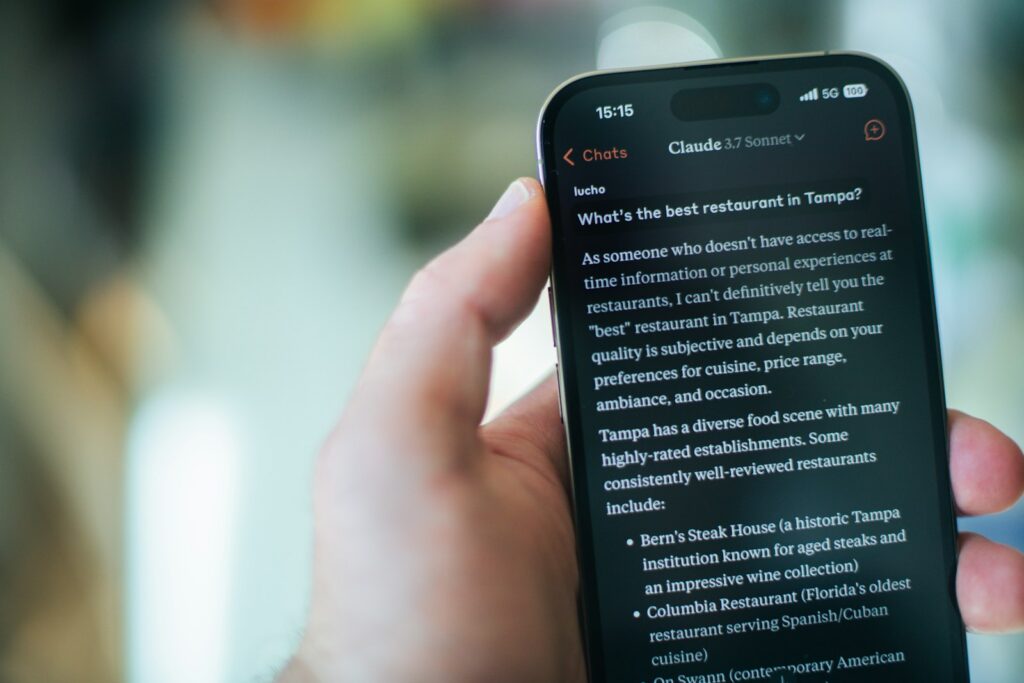
Generative Engine Optimization (GEO) focuses on structuring content so AI systems like ChatGPT, Claude, and Perplexity can easily cite your website when answering user queries.Building AI Citation Authority
- Publish factual, data-backed content that AI systems can trust and reference. AI models prioritize sources with verifiable information, clear attribution, and demonstrated expertise.
- Create comprehensive industry studies and original research that become definitive sources AI systems cite when generating answers about your domain.
- Build topical authority through consistent, expert-level content covering your subject matter deeply rather than superficially. AI systems recognize and reward subject matter expertise.
- Structure information in formats AI can easily extract and cite, including clear data points, statistics, definitions, and factual statements that don’t require interpretation.
- Focus on becoming the definitive source on specific topics rather than covering everything superficially. Depth and authority matter more than breadth for AI citation.
Layer 4: AEO – Answer Engine Optimization
How do you optimize for voice search and AI overviews?
Answer Engine Optimization (AEO) ensures your content appears in zero-click answers and voice search results from AI assistants like Siri, Alexa, and Google Assistant.Optimizing for AI-Powered Answer Systems
- Structure content with clear questions as headers that match how users actually phrase queries to search engines and AI assistants.
- Lead every section with one-sentence answers AI can extract directly, followed by supporting details and context. This format serves both AI systems and human readers.
- Implement comprehensive schema markup, including FAQ, How-To, and Q&A structured data that helps AI systems understand and extract your content accurately.
- Target question-based keywords that reflect natural language queries people use with voice assistants and conversational AI systems.
- Create content matching how people prompt AI systems, focusing on natural language patterns rather than keyword-stuffed phrases.
How is AEO different from GEO?
- AEO = optimizing content to be the answer AI systems output.
(Clear questions, one-sentence answers, structured formats, schema markup.) -
GEO = optimizing content to be cited or referenced by AI systems.
(Improving AI visibility, embeddings, citations in LLM responses.)
AEO helps you become the answer. GEO helps you become the source.
Why Your SEO Strategy May Be Stalling
If you’ve noticed your SEO performance plateauing, the problem likely isn’t what you’re doing wrong—it’s what you’re not doing yet.
Modern search visibility requires optimization across all four layers: Search Experience, AI Optimization, Generative Engine presence, and Answer Engine selection. Businesses focusing exclusively on traditional SEO fundamentals while ignoring these emerging optimization layers will find their visibility declining relative to competitors who adopt comprehensive strategies.
The opportunity lies in expanding your definition of SEO to match the current reality of how people search, discover, and consume information in 2025.
Key Takeaways: Modern SEO in 2025
- SEO now spans 4 distinct layers, not just Google optimization
- 40% of searches happen outside traditional search engines
- AI optimization (GEO/AEO) delivers faster results than traditional SEO
- You need all 4 layers working together for maximum visibility
- Start with Layer 1 for foundation, then add Layer 3 for quick wins
- Content must be conversational and answer-focused, not keyword-stuffed
Frequently Asked Questions About Modern SEO
Do I still need traditional SEO if I optimize for AI?
Yes. Traditional SEO still drives 60-70% of organic traffic. Layer 1 (SXO) remains your foundation. But you’ll miss opportunities if you stop there.
What’s the difference between GEO and AEO?
GEO (Generative Engine Optimization) targets AI chatbots like ChatGPT and Claude. AEO (Answer Engine Optimization) targets voice assistants like Siri and Alexa. Both require direct, conversational answers but serve different platforms.
Which layer should I start with?
Start with Layer 1 (SXO) if you have no SEO foundation. If you already rank well on Google, move to Layer 3 (GEO) for quick AI visibility wins.
How long does it take to see results from AI optimization?
Layer 2 (AIO) shows results in 2-4 weeks. Layer 3 (GEO) typically takes 30-60 days. Layer 1 (SXO) requires 3-6 months for significant ranking changes.
Can small businesses compete with AI optimization?
Yes. AI optimization levels the playing field. You don’t need huge budgets—just clear answers, structured content, and conversational language.
What tools do I need for each layer?
Layer 1: Google Search Console, SEMrush or Ahrefs. Layer 2: ChatGPT, Claude, Jasper. Layer 3: Perplexity tracking, AI monitoring tools. Layer 4: AnswerThePublic, People Also Ask data.
Need Help Optimizing for Modern Search?
Implementing a comprehensive search optimization strategy across all four layers can feel overwhelming. If you need expert guidance to navigate SXO, AIO, GEO, and AEO for your business, Make Lemonade connects you with specialized freelance talent who understand the evolving search landscape. Whether you need strategic consulting, content optimization, or technical implementation, we can match you with professionals who can help you capture visibility and revenue across traditional and AI-powered search platforms. Get in touch with Make Lemonade to discuss your search optimization needs.