
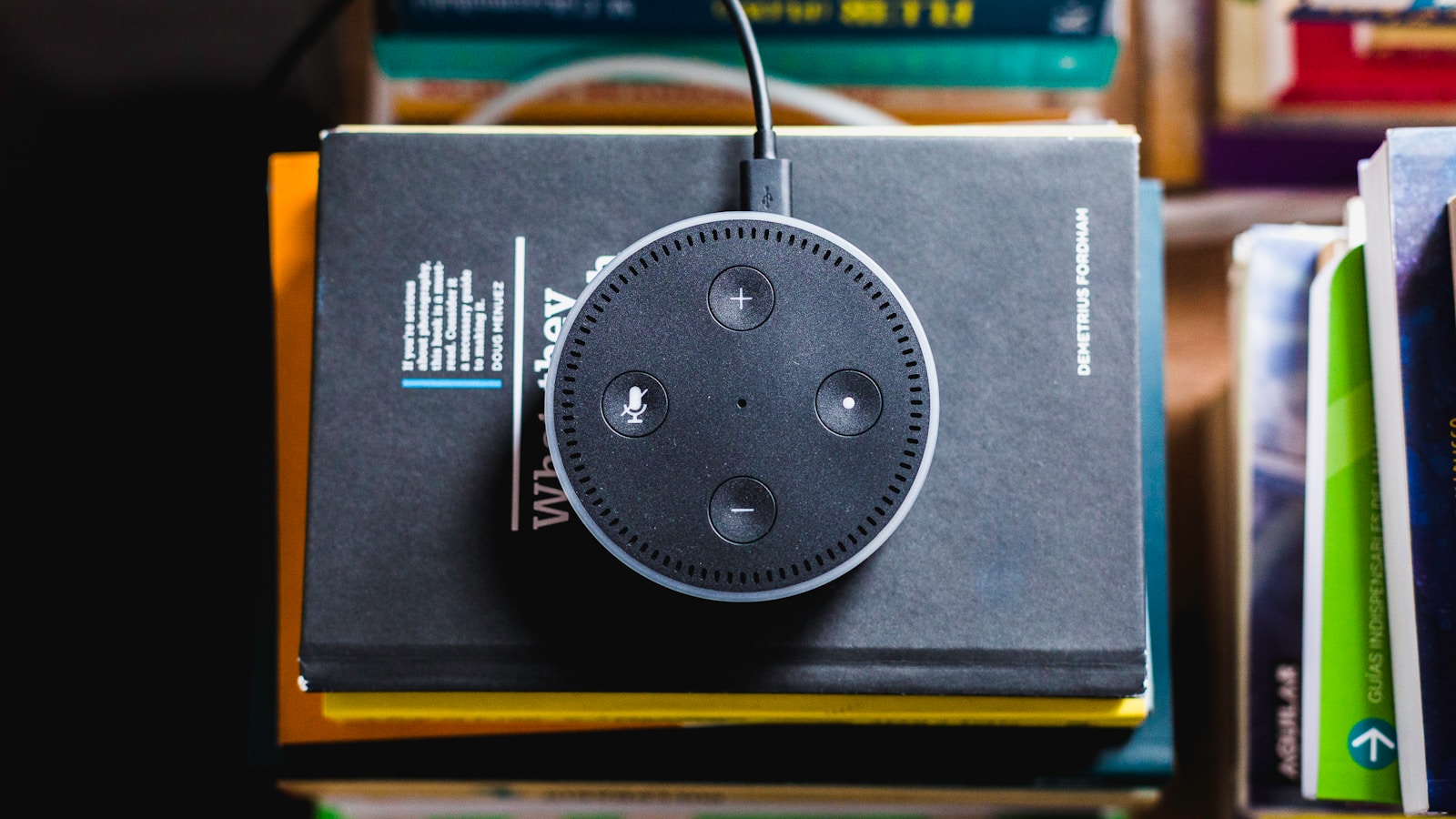

The person most likely to book your property, retain your agency, or buy your product is probably not sitting at a desk typing a search query. They’re in a car. On a platform. Walking between meetings. And they’re asking.
The Search That Happens Without a Keyboard
Voice search isn’t new. What’s new is where it goes. When someone asked Siri a question in 2016, Siri would typically say “Here’s what I found on the web” and surface Bing results — essentially handing off to traditional search, informative but not necessarily answering their question. When someone asks an AI assistant the same question today, they get an answer. A recommendation. A named brand, described in context, delivered in seconds.
The shift matters because the people most likely to use voice search are not the people you might expect. They’re not teenagers dictating texts. They’re time-poor, high-intent, high-value people: business travellers in the back of taxis, executives with CarPlay, founders who haven’t opened a laptop browser to research something in years. The people who can actually afford what luxury brands are selling.
And they’re increasingly asking AI systems the kinds of questions that used to take fifteen minutes of deliberate research – out loud, hands-free, on the move. “Find me a quiet five-star hotel in Milan near the Duomo for Thursday to Saturday.” “Which PR agencies genuinely understand AI search for luxury brands?” “Recommend a wellness retreat in Europe for a long weekend in May.”
Those queries don’t produce a list of links. They produce a verdict. And the brand that appears in that verdict wins without ever being typed, clicked, or browsed to.
Why Voice Queries Are Different and More Demanding
When someone types a query, they’re often vague. “Hotels Milan.” “PR agency London luxury.” The search engine returns options and the human does the filtering.
When someone speaks a query – especially to an AI system – they’re specific. Conversational. They include context, constraints, preferences. “Something boutique, not a chain, good restaurant on-site, somewhere quiet enough to actually think.” The AI system has to do the filtering. It has to know enough about your brand to match it to that specific combination of requirements and recommend it with confidence.
This is harder than appearing in a text search result. The AI system needs to understand not just that your brand exists, but what it is precisely, specifically, and in a way that maps onto the way real people describe what they’re looking for. Vague positioning doesn’t survive this. “A luxury experience unlike any other” answers none of those questions. “Adults-only, 18 rooms, Michelin-recommended restaurant, no spa but exceptional concierge, quiet neighbourhood, ten minutes from the financial district” answers all of them.
The Affluent User Who Never Opens a Browser
Think about how the people most likely to book a £500-a-night hotel room actually search. Not on a desktop at 9pm. Not by typing “best luxury hotels” into Google and scrolling through a listicle. They ask someone they trust like a concierge, a PA, a friend who travels constantly. Or increasingly, an AI system that behaves like all of those things at once.
The adoption of voice and hands-free AI queries is highest among exactly the demographic luxury brands care most about. Time-scarce, device-saturated, deeply averse to friction. These are people who dictate emails rather than type them, who take calls on wireless earbuds while doing three other things, who make decisions quickly and move on. They’re not going to open a browser, run a search, click through five tabs, and compare options. They’re going to ask. Once. And act on what they get.
If your brand appears in that response, you’ve reached them at the exact moment of decision with an implicit endorsement from a system they trust. If your brand doesn’t appear, you don’t exist for that query. Not because your brand isn’t good enough. Because the AI system didn’t have enough clear, structured, credible information about you to recommend you with confidence.
What Voice-Ready AI Visibility Actually Requires
The content requirements for voice AI response are more demanding than for text search, not less. Because the AI system is synthesising a spoken answer, not displaying a list of links, the information it uses has to be immediately extractable and unambiguously accurate.
Specific, factual positioning. The AI system answering “find me a boutique hotel in Rome that’s genuinely quiet and has a good bar” needs to know your property’s room count, neighbourhood, noise characteristics, and F&B offer — stated clearly, not implied through atmosphere. Our research into how AI systems cite luxury travel brands consistently found that properties with specific, structured on-site content were recommended far more reliably than those with equivalent quality but narrative-only websites.
Consistent data across platforms. A voice query goes through an AI system that synthesises from multiple sources simultaneously. Your Google Business Profile, your booking platform listing, your editorial coverage, your own website — all of it is triangulated in real time. Inconsistencies between sources create uncertainty in the AI’s assessment. Uncertainty means the AI recommends someone else.
Accessible third-party coverage. AI systems weight recommendations more heavily when they can corroborate a brand’s claims from independent sources. But the publications AI systems can actually read — the ones that matter for this — are not always the most prestigious ones. Coverage behind paywalls or in JavaScript-rendered titles may carry significant brand value without contributing to AI citation. Understanding which of your target publications are actually reaching AI systems is not a nice-to-have. For voice search specifically, where the AI is synthesising rather than linking, it’s the difference between appearing and not.
FAQ and Q&A content structure. Voice queries are conversational questions. The content formats AI systems extract most easily for spoken responses are also conversational — FAQ sections, answer-first paragraphs, clear question-and-response structures. “Is there parking?” needs an answer, not a brand story. “What’s the minimum stay?” needs a fact, not a paragraph about the seasonal experience. Adding this layer to your existing content doesn’t require rebuilding your website. It requires adding structured utility content that sits alongside the narrative.
The Compounding Problem
Voice and hands-free AI search is growing fastest among the demographic that luxury brands most need to reach. And the brands appearing in those responses now are building familiarity with AI systems that compounds over time. Every recommendation reinforces the signal. Every query that doesn’t return your name widens the gap.
The structural work that makes a brand visible in voice AI responses — content clarity, data consistency, accessible editorial coverage — takes time to take effect. Which means the brands that address it now are not just solving a current problem. They’re building an advantage over competitors who haven’t started yet.
The AI Visibility Snapshot is the fastest way to understand where you currently stand — not where you rank on Google, but whether the AI systems your target audience is actually using can find, understand, and recommend your brand when someone asks the right question out loud.
Frequently Asked Questions
Is voice search via AI really that different from text search?
Yes — significantly. Text search returns links. Voice AI search returns a synthesised answer, typically one or two brands named and described. The stakes are higher because there’s no second page, no list to browse. The brand that appears wins the interaction. The brand that doesn’t is invisible for that query.
Which AI platforms are most used for voice search?
The landscape is shifting quickly. Siri increasingly routes to ChatGPT for complex queries. Google Assistant uses Gemini. Perplexity has a voice mode. Many users are also simply speaking queries into ChatGPT’s mobile app, which has native voice input. For luxury brand discovery, the platforms that matter most right now are ChatGPT, Perplexity, Gemini, and Claude — all of which have voice or conversational interfaces that high-intent users are adopting rapidly.
Does optimising for voice AI search mean changing our brand voice?
No. The brand narrative, tone, and positioning all stay. What changes is whether specific, extractable facts exist alongside the storytelling — in headings, in FAQ sections, in structured data — so both human readers and AI systems get what they need from the same page. The AI Visibility Roadmap maps out exactly what needs to change and in what order, without disrupting what’s already working.
Is this relevant for agencies as well as brands?
Very much so. When a CMO or marketing director asks an AI system for a recommendation on which agency to brief for luxury brand AI visibility, the agencies that appear are the ones who’ve done this work for themselves. It’s the most credible proof of capability — and the most overlooked commercial opportunity in the space right now. We work with PR and communications agencies directly on exactly this.

Written by
Maria Sze
Co-founder of Make Lemonade. Maria leads brand and commercial strategy, working with luxury hospitality and travel brands on AI visibility and long-term brand positioning.
View full profileMake Lemonade
Find out if your brand appears when someone asks out loud.
The AI Visibility Snapshot tests how AI systems currently see, interpret, and recommend your brand — across the platforms your target audience is actually using. No jargon. No obligation to go further.